Our Doctrine
Our Doctrinal Statement
We believe the sixty-six books of the Old and New Testaments to be the full record of God’s self- disclosure to mankind. Different men, while writing according to their own styles and personalities, were supernaturally moved along by the Holy Spirit to record God’s very words, inerrant in the original writings. Therefore, those applying themselves to study its literal, historical-grammatical context can accurately understand God’s Word. Scripture is fully trustworthy as our final and sufficient authority for all of life (2 Timothy 3:16-17; 2 Peter 1:20-21).
We believe in the one living and true God, eternally (John 17:3) existing in perfect unity as three equally and fully divine Persons: the Father, the Son, and the Holy Spirit (Matthew 28:19-20). Each member of the Godhead, while executing distinct but complementary roles in redemptive history, has precisely the same nature, attributes, and being, and is equally worthy of the same glory and honour and obedience (John 1:1-4; Acts 5:3-4).
We believe God the Father created all things for His glory according to His own will (Revelation 4:11), through His Son, Jesus Christ. He upholds all things by the Word of His power and grace, exercising sovereign headship over all creation, providence, and redemption (Colossians 1:17, Hebrews 1:3).
We believe that Jesus Christ, the eternal Son, moved by love in accordance with the will of the Father, took on human flesh (John 1:1, 14, 18). Conceived through the miraculous work of the Holy Spirit, He was born of the virgin Mary. He, being fully God and fully man (John 14:8-9), lived a sinless life and sacrificially shed His blood and died on the cross in our place accomplishing redemption for all who place their faith in Him. He arose visibly and bodily from the dead three days later and ascended into heaven, where, at the Father’s right hand, He is now Head of His Body the Church, the only Saviour and Mediator between God and man, and will return to earth in power and glory to consummate His redemptive mission (1 Timothy 3:16).
We believe that the Holy Spirit, in all that He does, glorifies the Lord Jesus Christ during this age. He convicts the world of sin, righteousness, and judgment. He draws the unredeemed to repentance and faith, and at salvation imparts new spiritual life to the believer, bringing that person into union with Christ and the Body of Christ. The Holy Spirit sanctifies, seals, fills, guides, instructs, comforts, equips, empowers, permanently indwells at salvation, and bestows spiritual giſts to the believer for Christ-like living and service (John 16:8; 13:15; Titus 3:5; Ephesians 1:22; 4:11-12; Romans 8:9-17; 12:4-8; 1 Corinthians 3:16; 12:4-5,11-13,19; Galatians 5:25; Hebrews 2:1-4; 2 Corinthians 12:12).
We believe that God created mankind—male and female—in His own image and likeness, free of sin, to glorify Himself and enjoy His fellowship. Tempted by Satan, but in the sovereign plan of God, man freely chose to disobey God, bringing sin, death and condemnation to all mankind. All human beings, therefore, are totally depraved by nature and by choice. Alienated from God without defense or excuse, and subject to God’s righteous wrath, all of mankind is in desperate need of the Saviour (Genesis 3:1-6; Romans 3:10-19; Romans 1:18, 32).
We believe that the Lord Jesus Christ died for our sins according to the Scriptures, as the substitutionary atonement in our place, and that salvation is found in none other than Jesus Christ. Jesus Christ’s death on the cross was the sole and complete payment for sins, fully satisfying God’s righteous wrath, for each person that turns from sin in repentance and places their faith in Christ alone by grace alone. At salvation each person is made a new creation by the Holy Spirit, declared righteous before God, and secured as an adopted child of God forever. Genuine faith continues in obedience and love for Jesus Christ with a life eager to glorify God and persevere to the end (Romans 8:37-39; 2 Corinthians 5:21; 1 Corinthians 12:13).
*We believe and teach that before creation, God chose those who would be saved and granted this unearned grace solely based on His sovereign good pleasure. However, affirmation of this aspect of the doctrine of salvation is not required for membership.
We believe that upon placing one’s faith in the Lord Jesus Christ as Saviour, the believer is made part of the Body of Christ, the one universal Church, of which Jesus Christ is the Head. The Scriptures command believers to gather locally in order to devote themselves to worship, prayer, teaching of the Word, fellowship, the ordinances of baptism and communion, service to the local body through the development and use of talents and spiritual giſts, and outreach to the world to make disciples (Ephesians 1:22-23; Acts 2:42-46; 1 Corinthians 14:26; Matthew 28:18-20). Wherever God’s people meet regularly in obedience to this command, there is the local expression of the Church under the watchful care of a plurality of elders. A church’s members are to work together in love and unity, intent on the ultimate purpose of glorifying Christ (Ephesians 4:16).
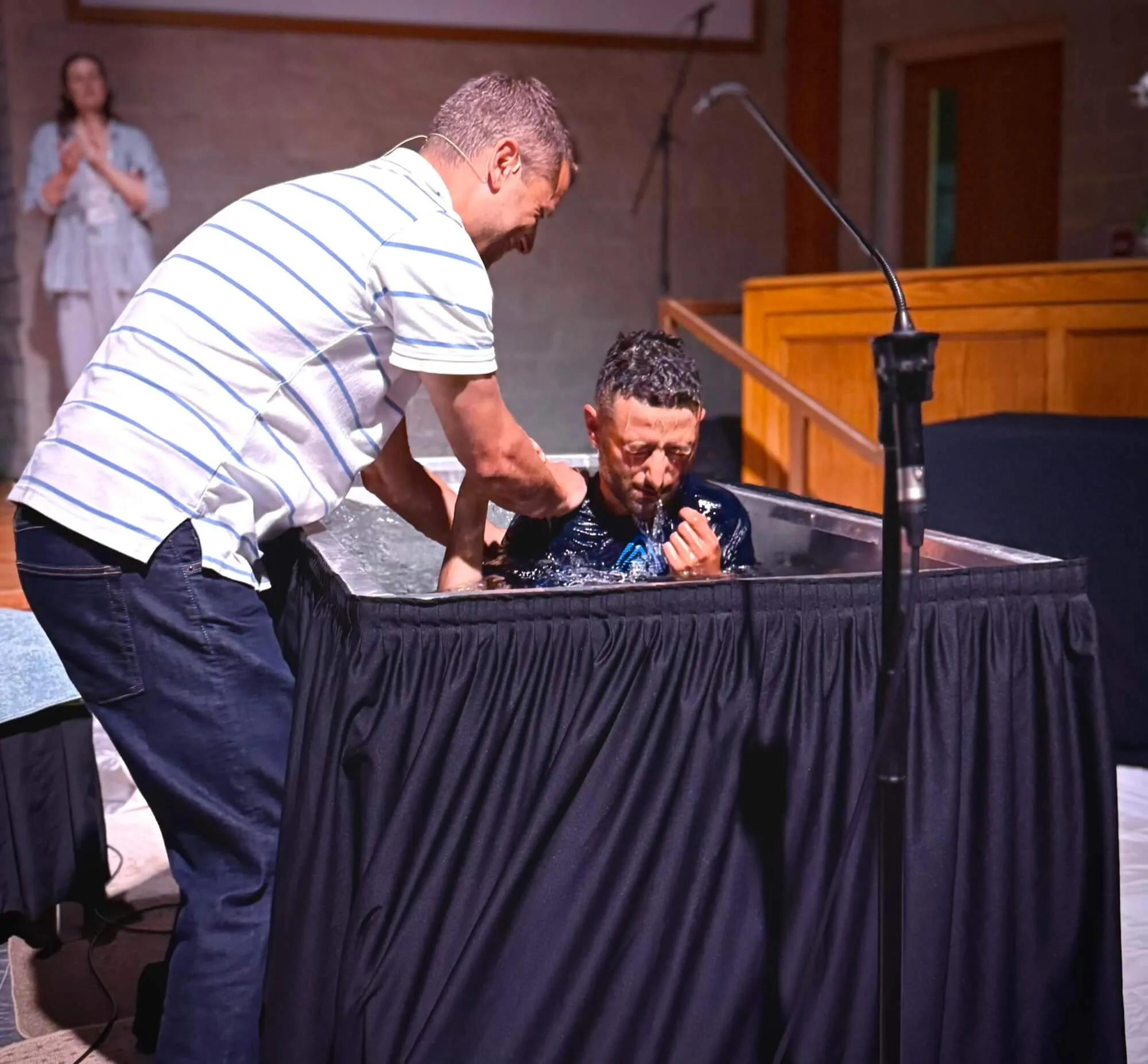
We believe that Christian baptism is a public declaration of the believer’s salvation in Christ, identifying with Christ in His death, burial, and resurrection symbolized by immersion in water. The Lord’s Supper is the united commemoration by believers of Christ’s death until He comes and should be preceded by a careful self-examination (Acts 2:41; Romans 6:3-6; 1 Corinthians 11:20-29).
We believe it is the aim, duty, and privilege of every believer and local church fellowship to glorify God by responding as active participants in the Great Commission call of Jesus Christ to go and make disciples of all nations. We believe the primary focus and priority of this call is centered on efforts that establish, strengthen, and reproduce biblically-based churches, which will then plant churches that plant churches for future generations and God’s glory. (Matthew 16:18b; Acts 1:8; 14:21-23;Revelation 7:9–10)
We believe in and expectantly await the imminent, glorious, visible, personal return of the Lord Jesus Christ. The blessed hope of His return has vital bearing on the personal life, service, and mission of the believer (1 Thessalonians 4:13-18). We believe in the bodily resurrection of both the saved and the lost. The lost will be raised to judgment and experience eternal wrath in hell. The saved will be raised to eternal joy in the new heaven and new earth in the manifested presence of God (Acts 1:3, 9; Hebrews 7:25-26; Revelation 19-22).
What we Believe About...
Our Teaching on Specific Issues
The purpose at every point of this process is to win a brother/sister to repentance, where forgiveness is extended and fellowship restored.
The process begins first on an individual level, where one confronts the sin of another and calls him/her to repentance. The second step is to confront again, this time with one or two additional believers present. These witnesses can affirm both the need for and the lack of repentance. The third step is to publicly tell the matter to the church, enlisting the help of everyone to call the sinning brother/sister to repentance. It is fitting at this point for this to be done under the oversight of the elders. The final step is to remove the individual in unrepentant sin from the fellowship of the church. Again, the hope all along is for restoration and that the need to escalate would be avoided through the demonstration of repentance.
We believe that adherence to this process is truly for the good of all, and for the glory of God.
Communion is the commemoration by believers of Christ’s death and a reminder-through the bread and the juice-of the Savior’s broken body and shed blood. Communion is to be a time of confession of our sin and should be preceded by careful self-examination (Acts 4:13; Romans 6:3-6; 1 Corinthians 11:20-29).
The commission is fulfilled as disciples of Jesus Christ are made and grow in their relationship with Him and likeness to Him. God is glorified as we manifest His presence as we do His work (2 Timothy 2:2; 1 Corinthians 10:31).
In seeking to act upon the church’s purpose, we recognize the extraordinary value in multiplying the reach of His ministry by planting local churches and by associating with existing, like-minded local churches. God is glorified when Redemption Church and other like-minded churches associate with one another in order to foster relationships that edify, protect, encourage, support and admonish.
The governing members, serving as directors of the Redemption Church Elders Council, oversee church planting through helping to launch new churches and assisting affiliate churches to more effectively spread the Word of God and the ways of God in order to advance the cause of Christ. The Elders Council desires to bless all affiliate churches through the mutual exchange of pulpit and music ministry, consulting services, research, conferences, and seed money devoted to church planting and pastoral education programs.
Current Displays of the Gift of Tongues:
1. Give unwarranted prominence to the gift, which is described in the New Testament as being only one of many spiritual gifts (1 Corinthians 12:1-31).
2. Emphasize speaking in tongues as the primary manifestation of the Spirit’s work in a person’s life, while minimizing the Spirit’s work in producing a holy life (2 Corinthians 3:17-18; 2 Timothy 1:9), and a life that displays the fruits of the Spirit (Galatians 5:22-23).
3. Often suggest that speaking in tongues is a required proof of being Spirit-filled or of possessing salvation in Christ, even though the Scriptures do not teach this.
Redemption Church seeks to prevent the propagation of doctrines that would cause divisions within an individual church. Therefore, members to and adherents of Redemption Church are not to propagate the teachings and emphases of the current charismatic movement. Although we do not control personal, individual interactions with the Lord, the expression of tongues and other sign gifts are not to be overtly expressed at meetings that are under the organization and authority of Redemption Church.
When psychology and other social sciences step beyond observing human behavior and seek to explain the causes of human behavior, they enter spiritual territory. Only the God of the Scriptures can explain causes and offer solutions that lead to godliness and a fruitful, joyful life. God has given us everything we need for life and godliness (2 Peter 1:3). He changes us as we discipline ourselves through obedience to the Word of God in the power of the Holy Spirit (1 Timothy 4:7; 2 Peter 1:5-11).
Each Christian’s passion should be to become more like Christ and fulfill the Great Commandment to love the Lord with the entire heart, soul, mind and strength (Romans 8:29; 1 John 3:2, Deuteronomy 6:5; Mark 12:30; Matthew 22:37-38).
The Christian who learns and applies the Word becomes mature and, in turn, can help others mature (2 Timothy 2:2).
God chose to create the universe and all that is in it to reveal His glory, divine nature, eternal power, infinite wisdom and supreme authority (Isaiah 43:7; Psalm 19:1-2; Jeremiah 10:12; Romans 1:20; Revelation 4:11).
We deny the theory of evolution, which states that nonliving substances gave rise to the first living material, which then reproduced and diversified to produce all living creatures. We believe that all people are descendants of Adam and Eve, whom God created personally and individually and as complete human beings (Genesis 1:26-27; Genesis 2:7; Genesis 2:21-22; 1 Corinthians 11:8-9). The fall of Adam and Eve infected all people with sin and death, but the death and resurrection of Jesus Christ gives the opportunity to receive God’s gift of eternal life (Romans 5:18-19; 1 Corinthians 15:21-22).
God rules over His creation and cares about and is involved in the lives of individual people (Job 12:10; Acts 17:25; Colossians 1:17; Hebrews 1:13; Ephesians 4:6).
Eternal security in salvation relies on the Lord’s guarantee of each believer’s adoption as His son or daughter (Galatians 4:4-7), and His seal of the believer by the Holy Spirit (2 Corinthians 1:21-22; Ephesians 1:13-14), and the conviction that God gives the Holy Spirit to each believer as a down payment toward future bliss in heaven (2 Corinthians 1:21-22). A person who professes genuine faith in Christ immediately becomes His possession (Luke 23:42-43; Acts 2:40-41; Acts 16:30-34), and nothing can snatch that person out of His hands (John 10:27-29). Having been bought with the price of Jesus Christ’s crucifixion as complete payment for sin, Christians are not their own. They are Christ’s possession (1 Corinthians 6:19-20). This assurance is absolutely certain, reserved in heaven, protected by God’s unlimited power (1 Peter 1:4-5).
Although it is appropriate to pray in Jesus’ name for protection against demonic activity, the Scriptures do not instruct the Christian to “bind Satan in Jesus’ name.” Rather, the Scriptures instruct the Christian to combat Satan by:
1. Humbly drawing near to God, knowing that He will give grace, mercy and strength (2 Corinthians 12:7-9; Hebrews 4:15-16; James 4:8; 1 Peter 5:6-10).
2. Resisting his temptations (James 4:7; 1 Peter 5:8-9).
3. Rightly applying the truth of the Scriptures (Matthew 4:1-11; John 8:44; Ephesians 4:24-27).
4. Forgiving offenses (2 Corinthians 2:10-11).
5. Putting on the armor of God’s truth, righteousness, readiness to share the Gospel, faith, salvation and prayer (Ephesians 6:11-20).
6. Demonstrating faithfulness to the Lord by enduring trials (Revelation 2:10; Revelation 2:13; Revelation 3:9-10).
The chief purpose of mankind is to glorify God by loving Him with the entire heart, soul, mind and might (Deuteronomy 6:5; Isaiah 43:7; Matthew 22:37). All believing men, women and children are to glorify God and thus fulfill the purpose of their existence. Worship glorifies God through adoration (Psalm 95:6), praise (Psalm 99:5), prayer (Daniel 6:10-11), thanksgiving (Nehemiah 12:46) and a complete yielding to Him (Romans 12:1). Worship declares His worth, pays Him homage and celebrates Him in a life of devotion. We seek to worship the Lord in spirit and in truth (Exodus 15:1-21; 2 Samuel 6:14-16; Psalm 5:7; John 4:23-24; Revelation 4:11; 5:12).
Several tenets guide our worship. We seek to:
- Lift high the name of Jesus Christ (John 4:22-26; John 12:32; John 14:6) Lead God’s people to lift their hearts and voices to Him, giving Him praise and thanks in music and lyric (Nehemiah 12:45-46; Psalm 66:1-4; Psalm 95:1-2).
- Prepare hearts to hear the Lord speak through the proclamation of Scripture (Psalm 95:6-9; Matthew 28:19-20; Acts 2:41-42).
- Emphasize fresh and contemporary expressions while retaining traditional elements that recognize the richness of our heritage in the faith (Deuteronomy 32:7; Psalm 33:3; Isaiah 46:8-9; Ephesians 5:19; Revelation 5:9).
- Pursue excellence in worship, knowing that God is worthy of our best (Exodus 12; Deuteronomy 17:1; Psalm 33:3, 1 Timothy 4:14-15; Hebrews 11:4).